
The Year-Long Free Trial
The tool that solved everything — and still cost its creator the sale.

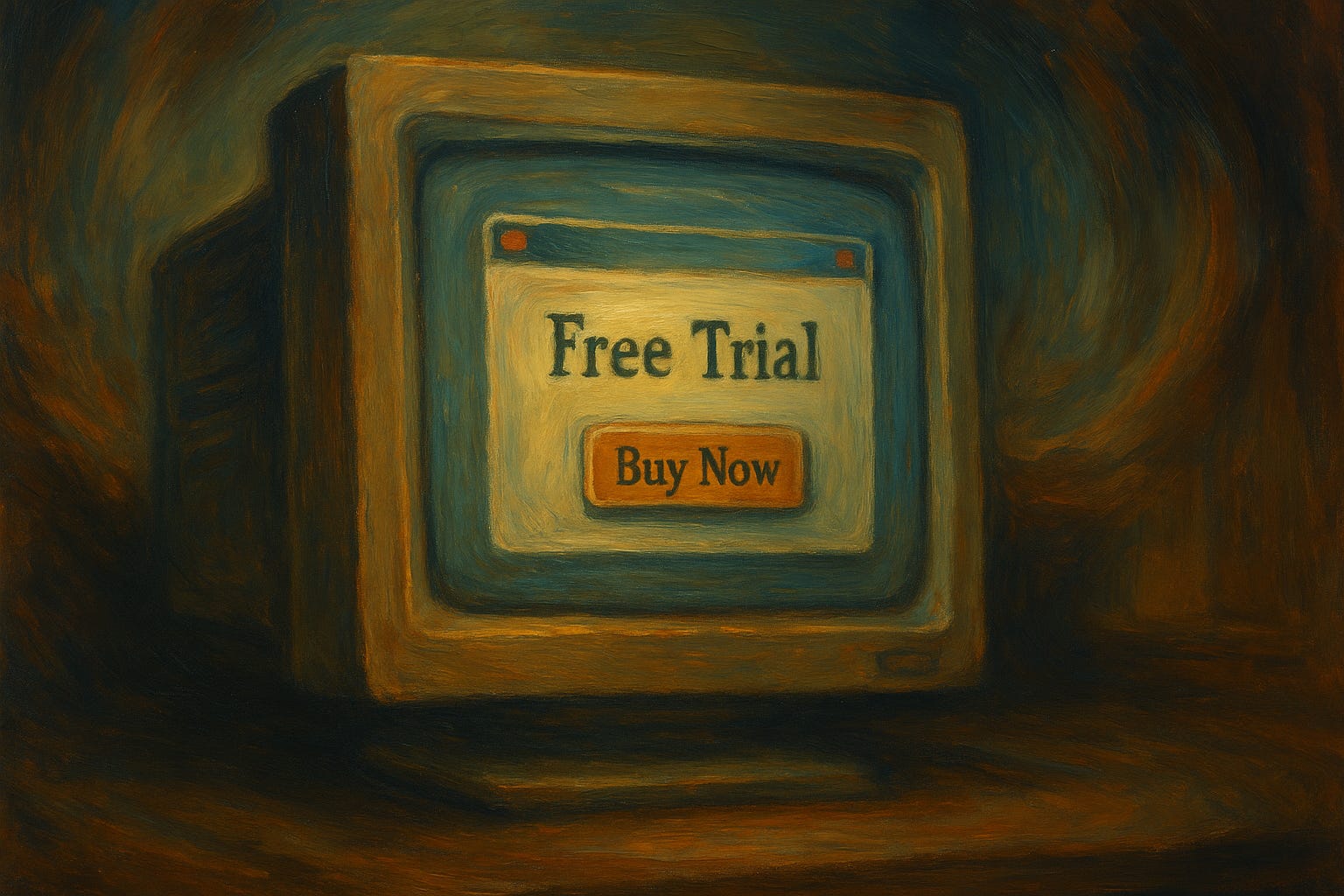
It’s a strange feeling to use a tool every day and have no idea if the person who built it is even alive.
A few years ago, on a massive, fast-moving project, we stumbled across this tiny piece of software that solved a very specific problem our main system couldn’t fix. The software had no branding, no real company footprint, no onboarding flow—just a download link, a bare little window, and a seven-day trial that ticked like a kitchen timer.
We figured we’d test it, buy a license, move on.
Except we couldn’t buy anything.
The upgrade button didn’t work.
The website felt abandoned.
The “contact” page might as well have been decorative.
We tried emailing. Nothing. Not a bounce, not an out-of-office—just radio silence. Meanwhile, the project kept barreling forward, so every week we did a clean wipe, reinstalled the trial, and kept going, like this was a normal part of modern software distribution.
And somewhere between the third reinstall and the tenth unanswered email, I realized this wasn’t a weird one-off.
If something this small could turn us into non-customers, then what frictions had I built—on my website, in my pitch, in my process—that were doing the same to someone else?
Once you see friction in the wild, you start seeing it everywhere.
The tiny stuff.
The stuff teams assume is harmless.
Some time ago, we reached out to a law firm for representation. Straightforward inquiry: here’s who we are, here’s what we need, are you taking clients? They got back to us six months later. No apology, no explanation—just a reply as if the thread were warm.
And then there was the message I sent in April of 2020—right in the middle of COVID—about a professional opportunity with real budget behind it. Something they could’ve benefited from if they’d answered within the same geological era.
Two years later—May 2022—I finally got a reply:
“Hi Graig, can you call me tomorrow?”
They misspelled my name.
They missed the moment.
They missed the entire world in which that conversation could’ve existed.
That’s the part people underestimate: when you wait too long to show up, you don’t just lose the deal—you lose the context the deal depended on.
People shift. Needs shift. Urgency shifts.
By the time a delayed reply lands, the story has already moved on.
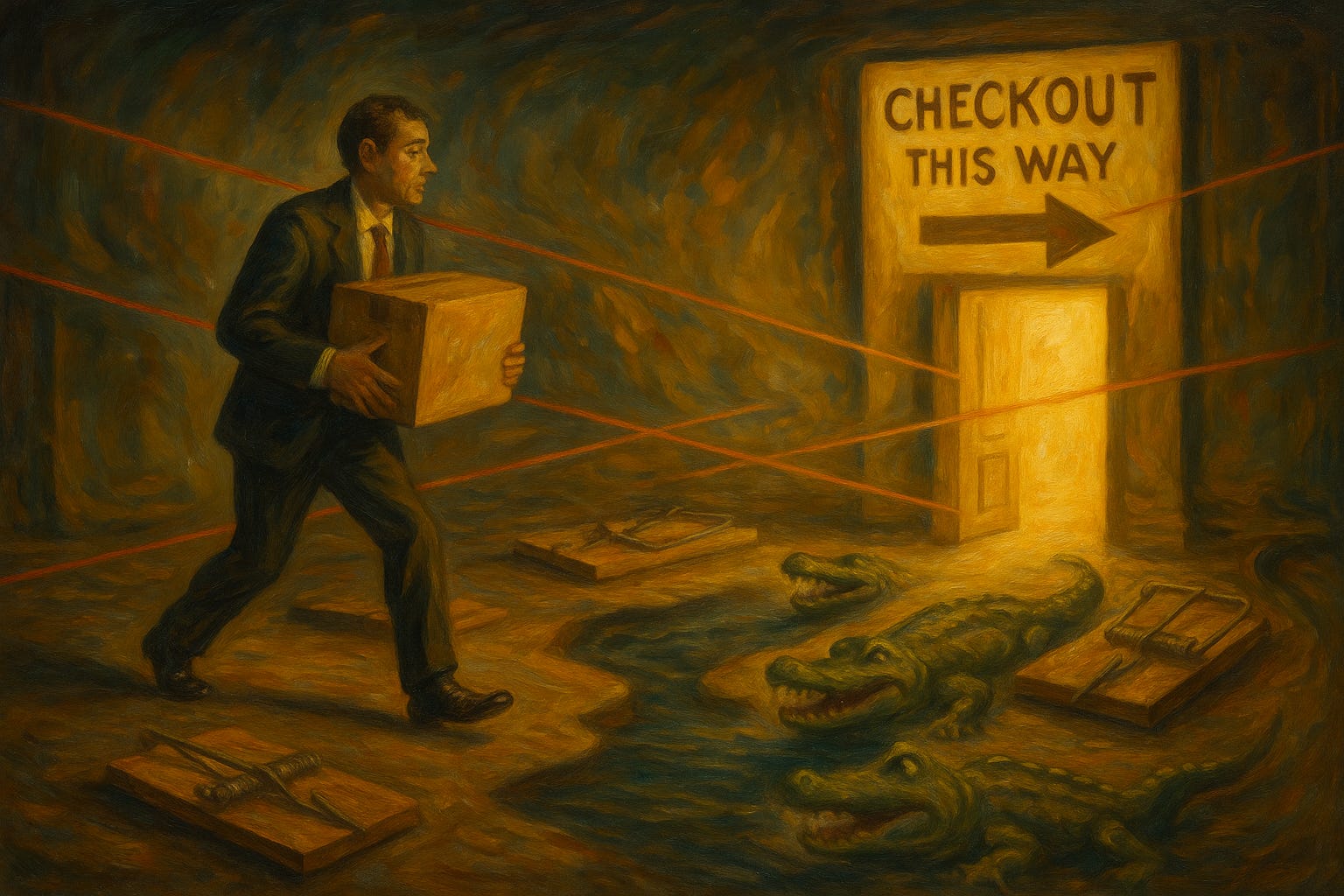
The more I paid attention, the more I realized the biggest leaks in business rarely come from big mistakes. They come from things so mundane you barely register them.
A checkout page that makes you create an account before you can buy.
A mobile site that looks fine on desktop but breaks the moment someone taps a menu icon.
A contact form that errors out and never tells the sender.
A calendar link with no openings for three weeks.
An onboarding flow that assumes everyone knows your terminology.
A pitch that insists “anyone can use this,” which is usually a red flag that no one specific will.
People love to talk about funnels, but most funnels don’t leak from the top—they leak from the seams no one is monitoring.

And let’s talk honestly:
Most founders hate marketing.
Most of us want the product to “speak for itself.”
I spent the majority of my life posting basically nothing on social media. Then the last six months hit, and I’ve posted more on LinkedIn and Substack than in the previous decades combined. I didn’t suddenly become extroverted. I finally accepted that if I don’t make myself visible, I can’t expect anyone to know I exist.
People can’t walk through a doorway they can’t see, and they won’t go hunting for one.
Visibility = availability.
This applies just as much to brick-and-mortar businesses as online ones.
How many restaurants have you walked past because the entrance looked closed even when it wasn’t?
How many stores have you skipped because the hours on the window didn’t match the hours on Google?
How many small businesses never get the chance simply because their phone number goes to a full voicemail box?
And how many times has someone tried to hire a freelancer or service provider and hit a paywall of friction: outdated portfolios, dead links, vague offerings, unclear pricing, no sense of who the work is actually for?
Everyone wants more customers.
Very few people make it easy to become one.
That’s the realization the seven-day trial forced into focus.
The product was amazing. We had the budget to license it for the entire project run and then some. But they lost us because everything around the product made reaching them feel like trying to catch fog.
And when I traced that feeling back into my own work, it wasn’t fun.
I started asking myself questions I’d conveniently avoided:
How many people bounced from a page I thought made sense but actually didn’t?
How many mobile users gave up because my site wasn’t optimized?
How many potential clients needed clarity on what we offer, and I left it implied instead of explicit?
The deeper I sit with this, the more I think most businesses misjudge where trust is built. They assume it’s in the product, or the pitch deck, or the pricing grid. But trust usually forms earlier—long before substance, long before features—at the moment someone decides whether you seem easy enough to engage with.
Most companies don’t need a better product.
They need fewer escape routes for the people already trying to get in.

If I could go back to that year-long seven-day trial, I wouldn’t change the tool at all. I’d change the doorway. I’d add a human. I’d give the creator a calendar link, a working form, a single button that leads somewhere real.
People don’t wait in hallways.
They don’t jiggle locked doors.
They don’t assume you’re worth the trouble.
They move on—to whatever is easiest, clearest, closest, or simply present.
Showing up doesn’t guarantee the opportunity.
But not showing up almost always kills it.
And most of the time, you won’t even know what you lost.
