
The Pet Store Principle
My cat demonstrated the first rule of business that everyone forgets.

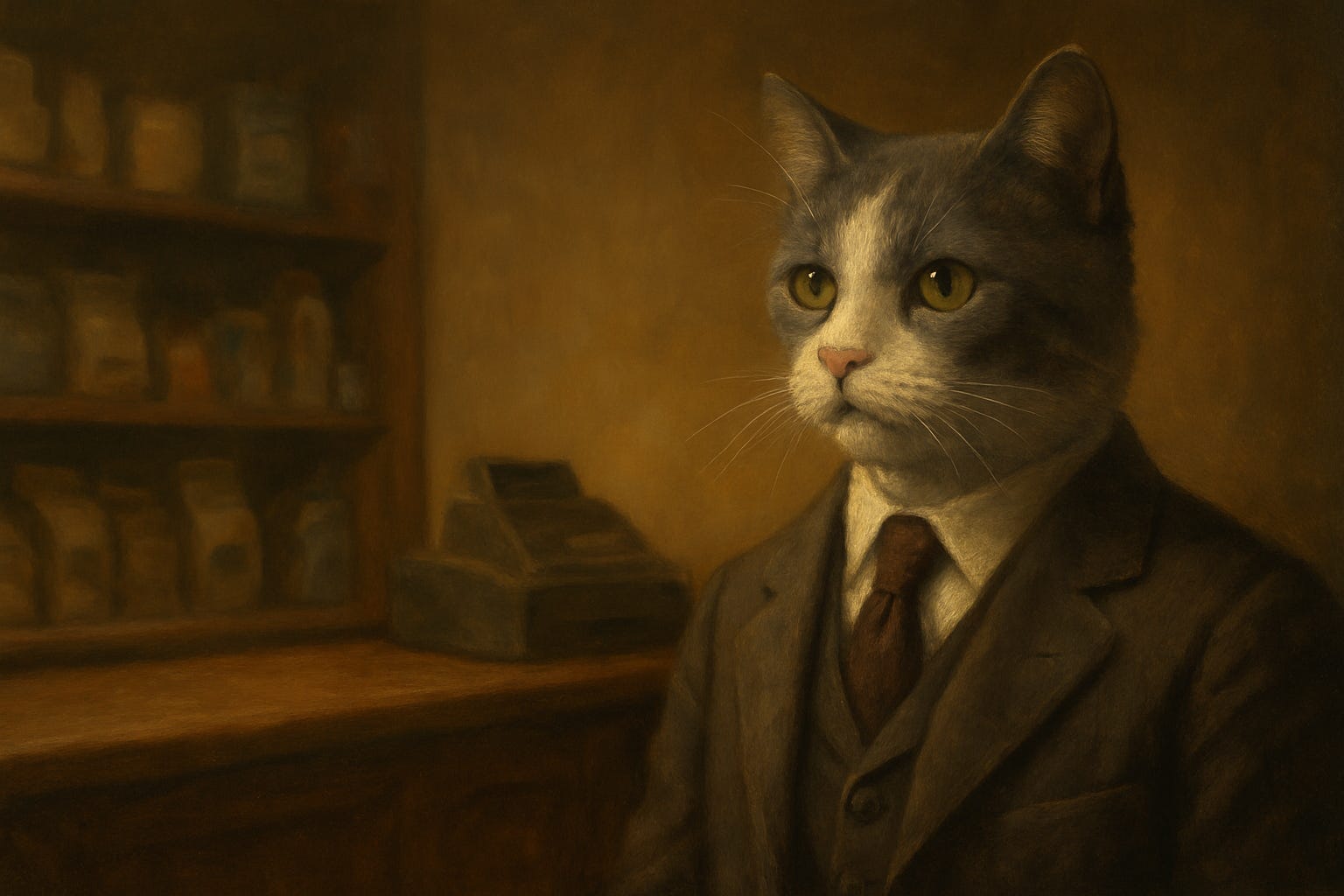
I wasn’t looking for a business lesson. I just wanted my cat to feel better. What I got instead was a masterclass from the most unlikely of places.
I like to think of myself as patient, but I’m really just optimized. I choose restaurants that let me book online. I’ll skip a doctor if their scheduling portal looks like it was built before touchscreens. I’ll pay extra for a product that ships same-day, not because I need it faster, but because the wait feels like uncertainty. Efficiency feels like control, until something small reminds you that you don’t actually have any.
When I adopted my cat, Marble, he was already a full-grown gentleman, two years old and solid. A soft, lumbering, fifteen-pound feline with the kind of presence that makes furniture look small. I was still getting to know him, trying to decode the little signals that tell you when a creature trusts you.
A few weeks in, he started showing hints that his digestion wasn’t keeping up with his appetite. Nothing serious, just enough to throw off his rhythm, and mine with it. The internet said to try a fiber supplement — dried pumpkin. Simple enough.
A local pet store had recently opened nearby. Small, independently owned, the kind of place you want to root for. Their website looked polished, their product listings detailed. They even offered online ordering for pickup. Perfect.
I ordered the dried pumpkin late that night, paid online, and went to bed feeling like I’d solved a small problem responsibly.
The next morning, I kept a close watch on my inbox. By noon, still nothing. I refreshed a few times, checked my spam, then my bank app. The payment had gone through. Each refresh felt a little more pointless. It was such a small errand, the kind you plan between other things, and somehow it was already becoming work.
Four hours into the business day, the email arrived:
“Your order is ready for pickup.”
When I walked in, the place was smaller than I expected — about the size of a one-bedroom apartment. Brightly lit, spotless, completely still. One employee behind the counter, scrolling his phone. I’d expected some bustle after waiting that long, but it was just quiet.
On the counter next to him sat a single bag of dried pumpkin. No tag, no bag, no receipt. Just sitting there, like it had been waiting for anyone who looked remotely interested.
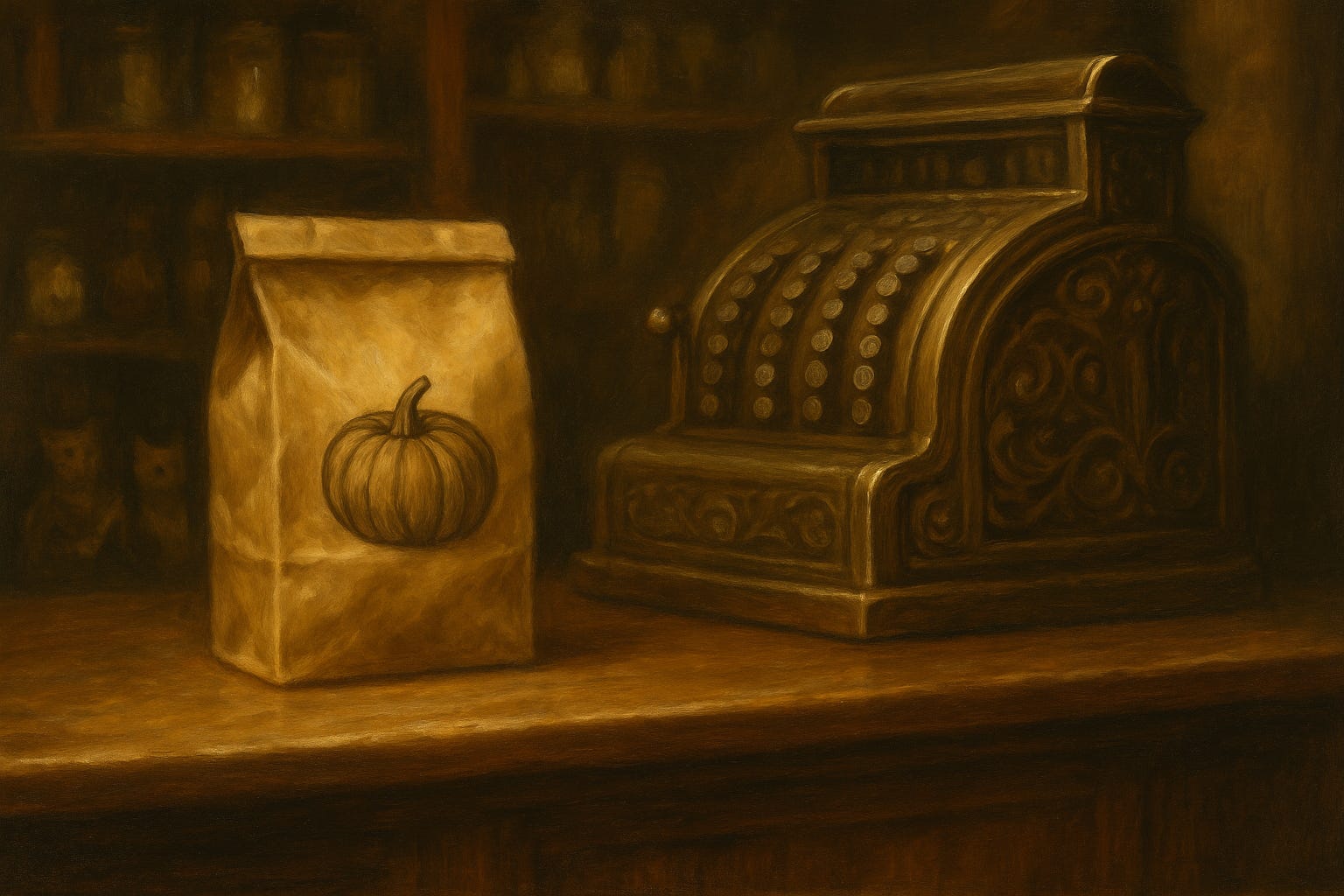
When I said I was there for a pickup, he smiled, reached for the bag, and — as if to fill the silence — started talking about the other flavors they carried. Pumpkin with cranberry, pumpkin with sweet potato, all stocked and ready to go. I nodded politely, still expecting him to hand me my order. Instead, he rang it up and asked me to pay.
And then I felt that small internal sigh you get when the easy thing becomes the hard thing. I’d done everything right: ordered ahead, paid online, waited patiently. And here I was, still explaining myself over a bag of pumpkin. The kind of moment that makes you think, why is nothing ever just easy?
“I already did,” I said. He looked unsure.
I pulled up the confirmation email on my phone and turned it toward him. “Online order, last night.”
He squinted, nodded, then apologized softly, but still uncertain. I could tell he was new, that the system was new. But there was no reassurance, no “you’re all set.” He just handed me the bag, like it was easier to let me leave than to figure out what went wrong.
I thanked him, because that’s what I do, and walked out. The door shut with that dull retail click — the sound of a place returning to its own silence.

By the time I reached the sidewalk, I knew I wouldn’t go back.
Not out of spite — just instinct. My first impression was sealed, a quiet “no” written in permanent ink.
That store is the one that made me wait for nothing. The one that made me explain a purchase I’d already completed. The one that turned an easy errand into effort.
I never meant to memorize that, but I did. And I’ve told that story more times than I ever expected — to my partner, to friends, now here.
The whole thing lasted five minutes, but the impression will last forever.
It didn’t hit me until later — how fast I’d written them off. How frictionless it is to abandon something you almost believed in.
We all do it. We call it convenience, but it’s really trust.
The less a system makes you think, the more you believe in it. The more you believe in it, the more you spend, return, engage.
That’s the physics of friction — it compounds invisibly. Every extra click, every delay, every awkward handoff creates drag. The system doesn’t need to fail dramatically; it just needs to remind you that you’re working harder than it is.
When I look at software now — my own included — I see what I’ve started calling The Pet Store Principle: you only get one first impression — don’t make the customer work for it.
A signup form that doesn’t autofill. A password reset that takes too long. An onboarding flow that assumes enthusiasm instead of anxiety.
Every founder says they’re building trust, but most are just building features. They add when they should remove. They assume the customer will understand the logic instead of feeling the friction.
And just like that store, they lose people not with a blow, but a shrug.
No one writes in to complain about a small delay or a confusing interface. They just never come back.
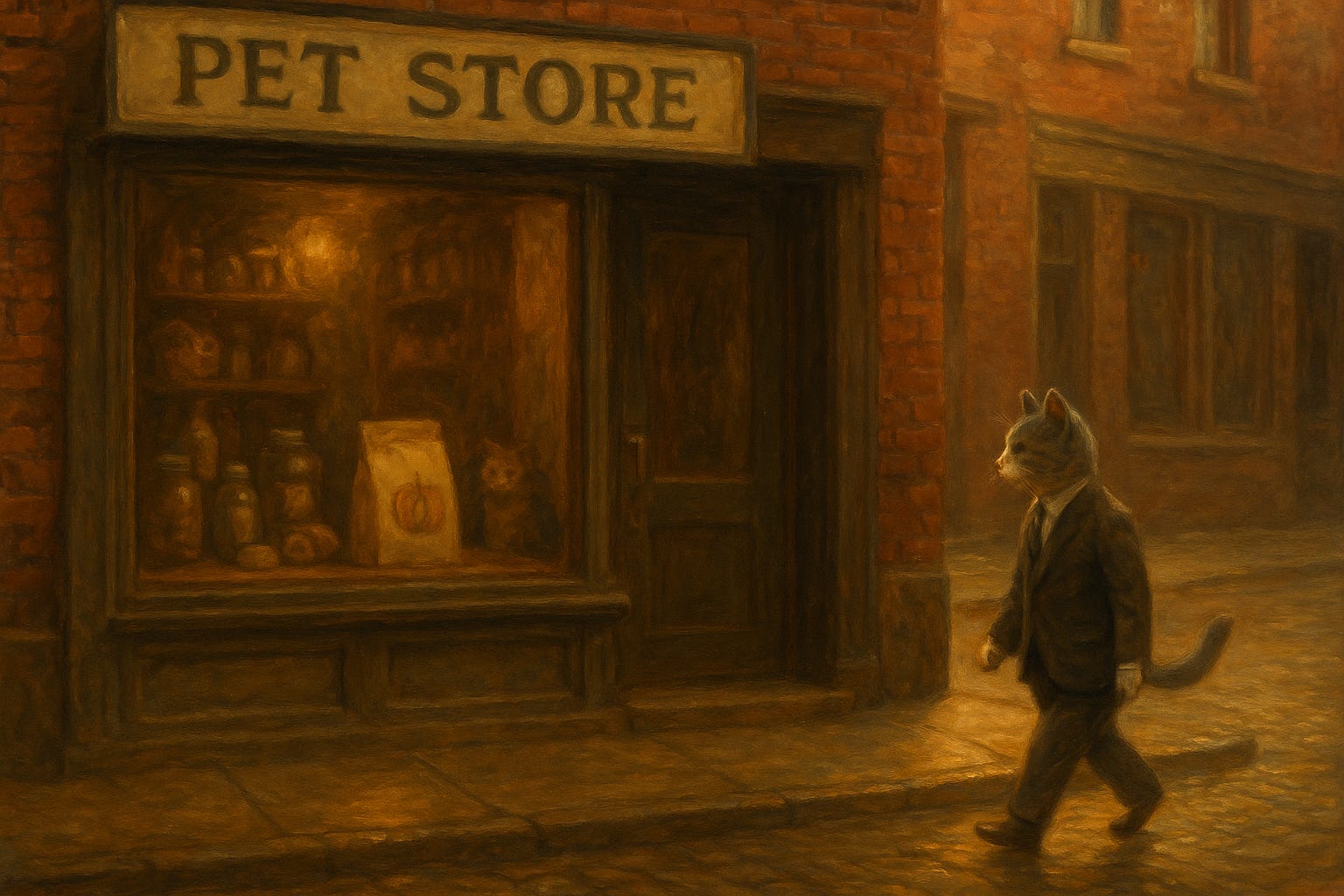
What stays with me about that afternoon isn’t the mistake — it’s how forgettable it was. That’s the danger. Bad experiences don’t always explode. Sometimes they dissolve quietly, like trust evaporating in slow motion.
The cashier probably forgot about me ten minutes after I left. But I still remember him — the quiet store, the bag of pumpkin sitting there like a metaphor that hadn’t revealed itself yet.
That bag was the whole business model in miniature: good intentions, poor execution, no second chance.
I wanted to believe in that place. But every time I pass by, I think of the delay and the confusion at the counter.
That’s what friction does — it rewrites the story for you.
It turns a small act of care into a quiet lesson about systems: you only get one first impression.
You won’t just lose a future sale. You’ll become the story your customer tells instead.
Once that happens, you never get them back.
