
The Marketing Mirage
I walked the trade show floor and watched businesses disappear before my eyes.


The first thing that caught my attention wasn’t lights, or signs, or someone talking — it was Daniel, tapping my shoulder.
“Now that’s good marketing,” he said. And pointed.
We were halfway through the trade show floor, surrounded by a desert of a hundred booths that looked almost identical. But this one stood out immediately: one clean sentence, no noise, no slogans about disruption. You didn’t have to think. You just knew what they did. Out of hundreds of companies, they were one of maybe three we remembered.
It was my first time at the Javits Center — thousands of people outside, lines for badges looping around the lobby. The Wi‑Fi barely worked. We lost connection to the floor plan ten minutes in and just started wandering.
What were we looking for? We couldn’t tell you. It wasn’t our job to have the pitch, it was theirs.
But the further we walked, the more impossible it became to tell one company from another. Rows of glowing screens. Sharp suits. Free tote bags. Every message bending toward the same promise:
AI for creators.
The future of media.
Next-gen… something.
The words repeated until they started to dissolve. Everything shimmered, and nothing stayed in focus.
I wanted to engage. I wanted to be pulled in. But nothing invited me. Every message was either too vague or too loud. Each booth seemed optimized for spectacle, not understanding. Some were barebones — a laptop on a folding table, a sheet of printer paper taped to the wall with the company name in black text. Others had massive LED walls, candy bowls, giveaway tables, looping demos. Different extremes, same result: you’d stop for a second, squint, and still have no idea what they did.
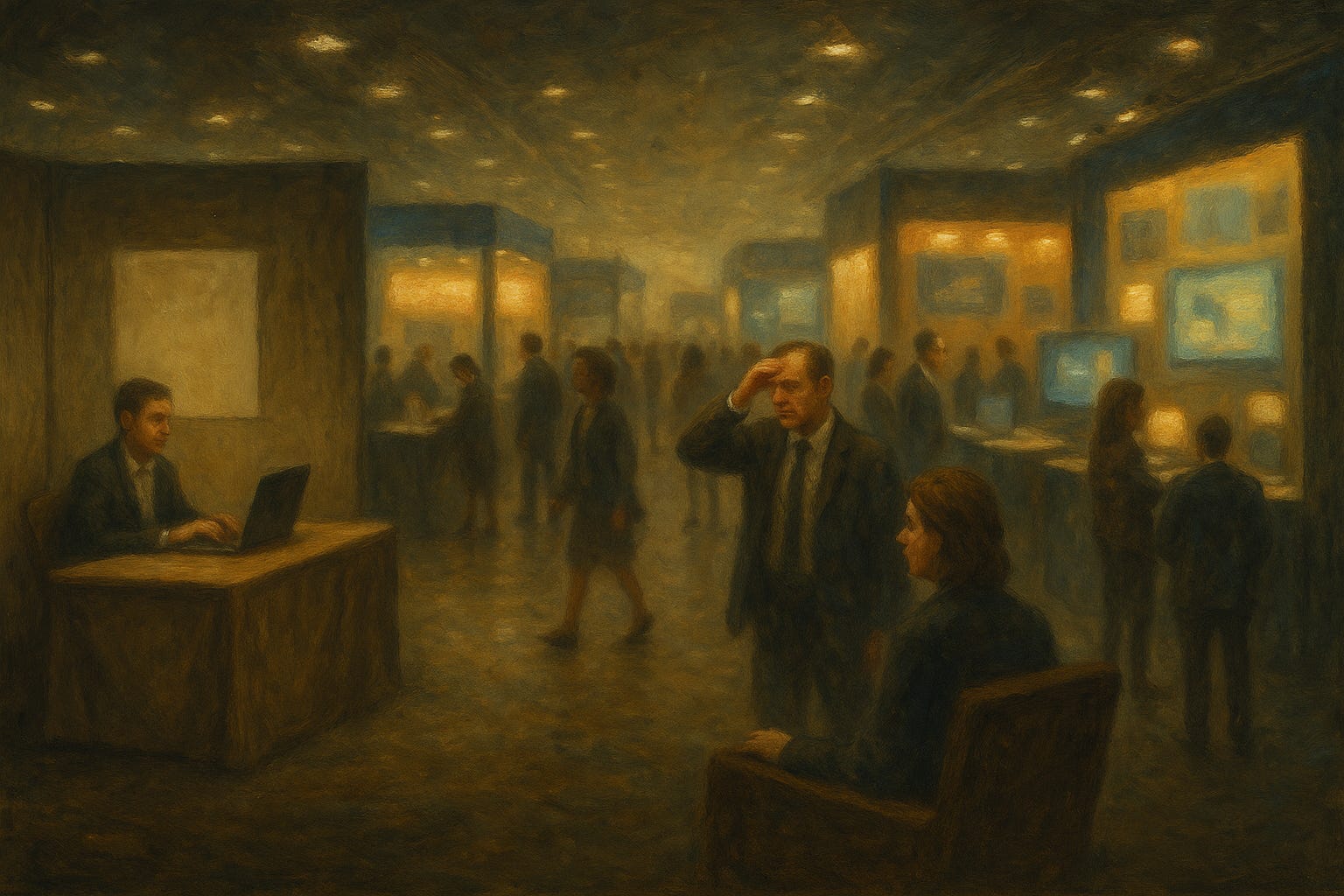
You could feel how much money and effort went into all of it — the travel, the staff, the design work. But so much of it still vanished.
I saw the hard truth: most teams aren’t bad at what they do. They’re bad at showing it. They’ve lost the ability to tell when something isn’t landing.
And I realized we weren’t immune to that either.
When we were building the landing page for our first enterprise software product, we thought we’d nailed it. Clean visuals, clear structure, strong copy. We were proud of it. But when we showed it around, even people already using our tools struggled to explain what the company actually did. They understood the product, but not the point.
That disconnect hit the same nerve as the trade show — standing in front of something full of potential that somehow communicates nothing.

It’s an easy trap to fall into. When you’re deep in your own work, it’s hard to remember that most people aren’t. You speak in shorthand, assume context, and convince yourself that a clever phrase will carry the meaning. It rarely does.
We didn’t need another round of polish. We needed to start over, to say what we did as plainly as possible, and then say it again until it stuck.
So we did what we always do when something feels off: we rebuilt it. Line by line, section by section, until it started to breathe. We tested copy, rewrote headlines, pitched the idea out loud, and listened for the pause — that tiny delay where someone still needs to translate. The goal wasn’t to be clever, it was to be grasped in one glance.
We ran it by users, friends, even family. Could they tell what we did in ten seconds? If not, back to the whiteboard.
That became our new baseline. If a potential customer has to think too long, they’re already gone. The world moves too fast for confusion. You only get a few seconds of attention, and in those seconds, you either earn trust or lose it.
When the new page finally clicked, we felt it instantly. People could describe us back to us. They understood the service, the value, and the outcome, all before scrolling. The conversation that followed was faster, smoother, and more honest. You could sense it in the tone of every call after that.
That’s the part most people miss. Clear communication isn’t just about marketing; it changes the relationship. When someone knows what you do right away, the rest of the interaction starts from alignment, not confusion. Every decision downstream gets easier.
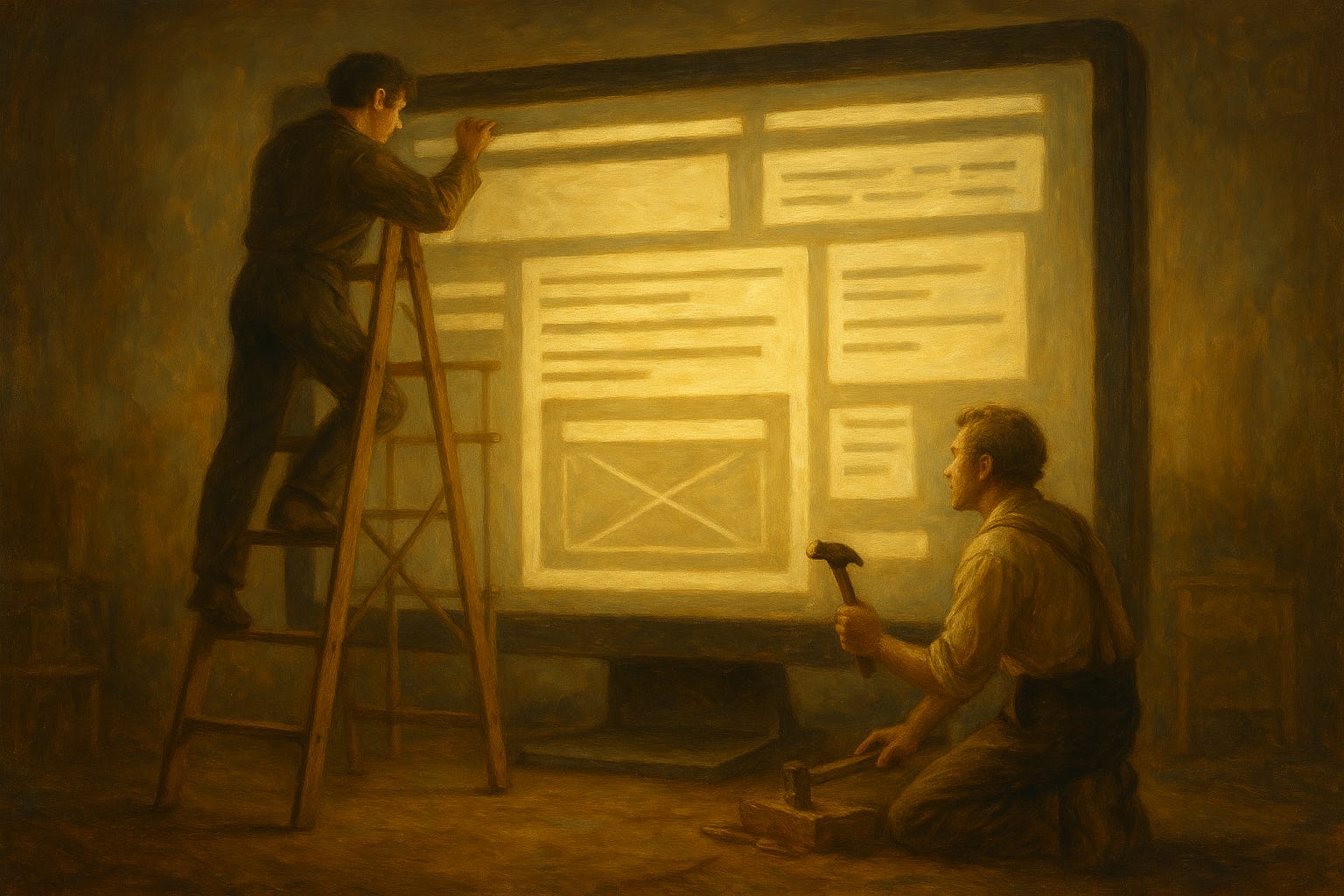
Over time, that became a habit. Every week, we block time to review how we’re showing up — our site, our decks, our emails, even our internal docs. We treat communication like part of the product itself, not decoration. Clean language makes sales faster, onboarding smoother, and client relationships steadier. It saves time on the back end because it removes friction on the front. We keep tuning until it feels right in the gut.
Most people don’t notice when something’s off; they only notice when it fails. But we’ve learned to trust that early discomfort that says, this isn’t landing yet.
And that’s what most of those booths were missing: the awareness. They’d spent everything trying to appear and never realized they’d gone invisible.
We left after one day. There wasn’t any more to learn.
The pattern was clear: so much motion, so little meaning.
You don’t need to know when it’s perfect.
You just need to know when it isn’t, and keep moving until you find something real.
