
The Invitation Incident
The point where personal life met founder brain.

Wedding planning has a way of revealing what kind of person you are.
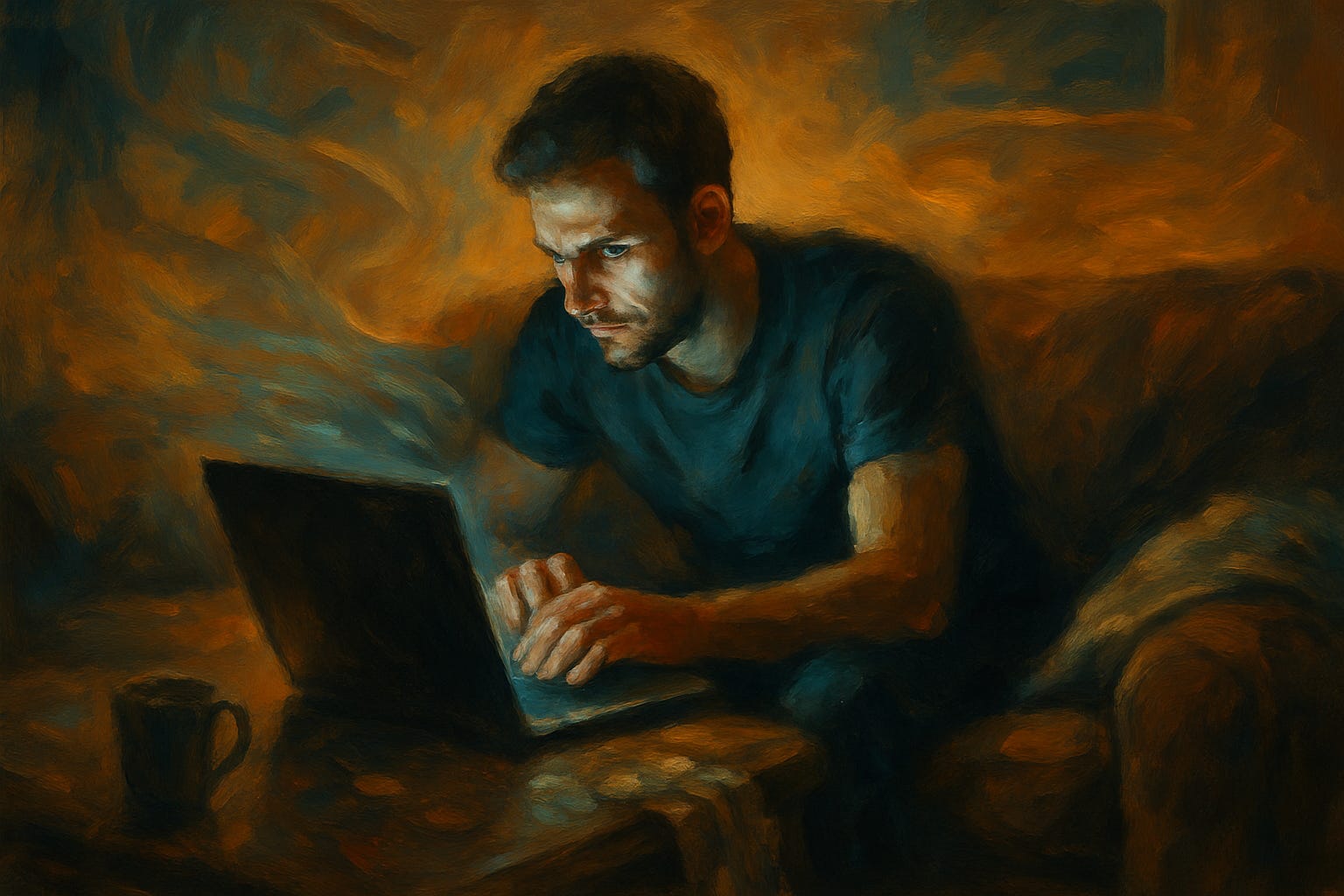
The moment that did it for me was sitting on the couch on a quiet evening, laptop open, staring at the screen and feeling something in my brain tighten the way it does when you’re confronted with something small that somehow feels… off. Not wrong enough to cause alarm bells. Just enough to make your instincts brace before your thoughts have formed a single sentence.
And that’s when I laughed.
Of course this bothered me.
Of course this was the part of wedding planning that would get under my skin.
I’ve never liked ads. In fact, I’ve hated them. I installed a network-wide ad blocker at home just to avoid seeing them. But after starting my business, after spending months shaping the way we present ourselves, something in me shifted. My perception rewired itself without asking permission. I became the kind of person who reacts to the smallest visual misalignment, the faintest wobble in tone, the choices most people never notice.
Which is why this tiny moment on the couch — this nothing — felt bigger than it had any right to.
Oh, to be clear — nothing catastrophic was happening. There was no crisis. It wasn’t a vendor falling through or a family disagreement or anything that would make sense in the catalog of wedding stress.
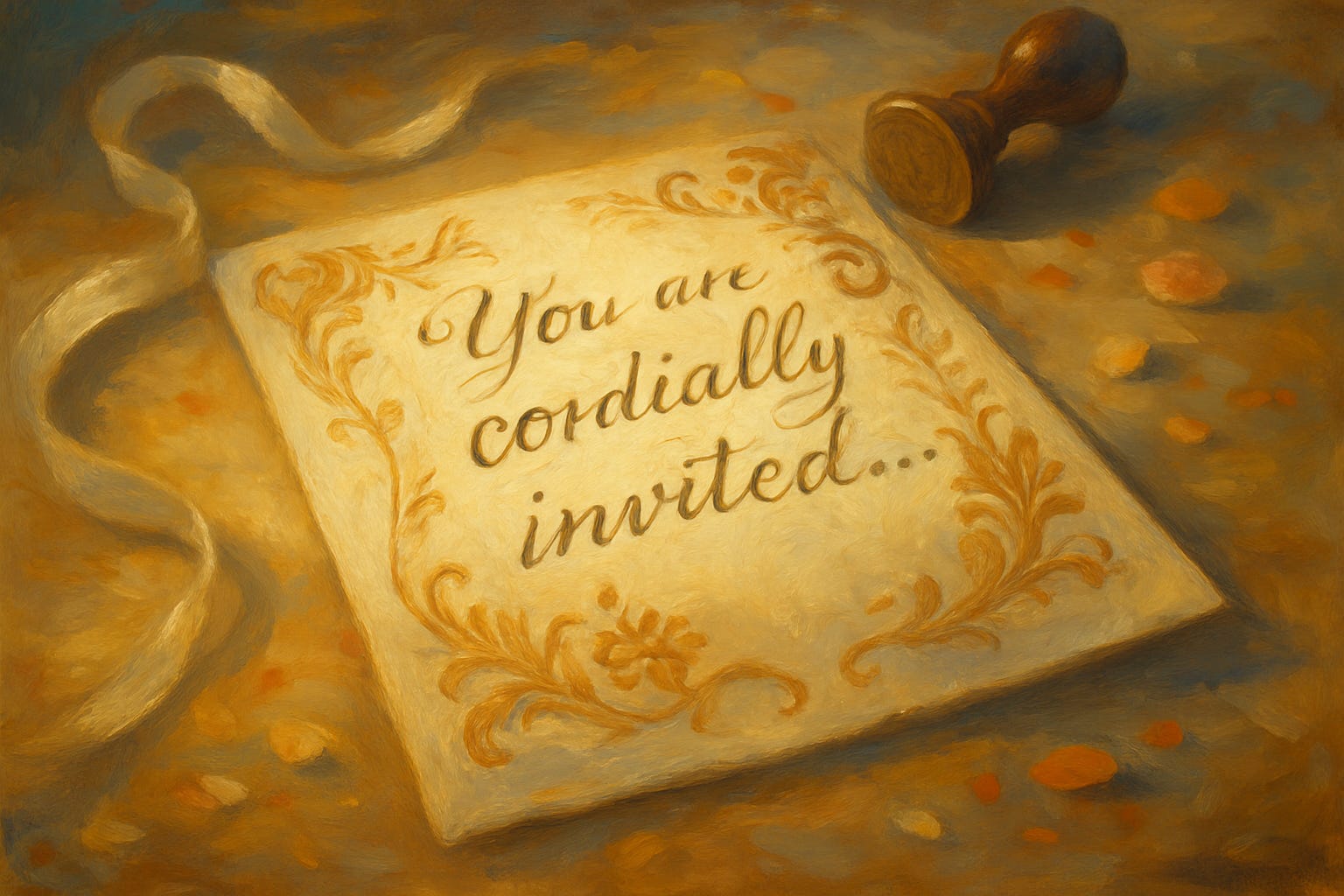
It was just an invitation. A harmless little template generated by an online design tool, the kind meant to make things easier.
But it had landed on my screen with a thud.
The design tool had served us a default layout, cheerful and harmless, the kind most people use without thinking twice. My partner had already elevated it brilliantly, adding soft, thoughtful elements that made it ours. She’d given it personality and grounding.
But the stock parts of the template she’d left in — the prefab copy, the decorative font, the lines stacked without intention — were driving me quietly insane. And the fact that they were driving me insane was… also driving me insane. I knew this wasn’t supposed to be the part I cared about.
And yet, here we were.
She looked over at me, amused and slightly alarmed.
“You good?”
“Yeah,” I said. “Just… give me a minute.”
She knows what that means. And she kindly lets it happen.
I spent the next hour pulling the invitation apart and putting it back together — rewriting the copy, throwing out the curly wedding font that felt like it belonged on a discount greeting card, introducing actual hierarchy so someone could glance at it and immediately understand what mattered. Date. Location. Dress code. Breathing room.
None of it was complicated. But all of it felt necessary.
The laugh wasn’t about the template.
It was about realizing how much I’d changed.

Somewhere between rewriting our business website for the tenth time and debating the weight of a headline, my brain decided this was my new operating mode. Suddenly, everything out in the world was auditioning for feedback. Before I even realized it, I had started seeing marketing everywhere.
On the subway, the ads I used to ignore became case studies. Which ones pulled me in without forcing it? Which ones pushed so hard they lost me? Most importantly, why? I wasn’t interrogating them out of duty. I was studying them without meaning to.

Walking through Times Square became a bizarre kind of education. Screens screaming for attention, each one brighter than the one beside it — until you notice the ones that don’t scream at all. A few didn’t rely on spectacle. They just… worked.
I remember sending my business partner a photo of a billboard that was nothing but simple black text on a white background. No graphics. No shine. But it somehow held its own.
And then there were the networking mixers.
I’d meet people whose entire careers revolved around marketing or SEO or brand strategy. They’d introduce themselves as specialists, as experts, as the people who could help you “tell your story.” Then I’d look up their websites later and find pages that felt thrown together — mismatched layouts, unfocused text, questionable design choices. Meanwhile, the rare person whose work was coherent and focused didn’t need to explain that they were good at what they did. Their site did it for them.
All of this accumulated quietly, day after day, until the rewiring became instinct.
Which is why the wedding invitation template didn’t stand a chance.
A year earlier, I would’ve chosen a template, swapped out our names, and called it done. I wouldn’t have noticed the way the lines crowded each other. I wouldn’t have questioned whether the date should stand apart or whether the tone of the copy matched who we are. I wouldn’t have felt any tension between the graphics my partner added and the typography that came baked into the design.
But starting a business changes how you see.
Not in the inspirational way people imagine, but in the slow, granular way that reencodes your basic instincts.
You start noticing intention where it exists — and where it doesn’t.
You start caring about the small things because the small things reveal the big things.
You start treating everything as information, even when you don’t mean to.
It’s the same shift I felt years ago when I worked in television and suddenly couldn’t watch a movie without seeing camera setups, lighting choices, pacing decisions. Once you learn the craft behind something, you stop experiencing the end result at face value. You start seeing the structure underneath.
Founding a company has the same effect — except now, the structure is literally baked into the world around me.
People often assume tools are what determine quality — the design software, the template library, the AI model that can rewrite anything in fifteen seconds. But tools aren’t where the real work begins.
Tools can accelerate.
They can refine.
They can help you explore versions you wouldn’t have reached alone.
But they cannot feel the moment something doesn’t sit right.
They cannot sense mismatch.
They cannot tell you which direction holds integrity and which one doesn’t.
AI can take what you already know you’re aiming for and make it tighter.
What it can’t do is decide what “right” feels like.
That’s the part only you learn — by noticing, again and again, what draws you in and what quietly pushes you away. By paying attention to the things that feel intentional and the things that feel like someone gave up halfway.
Most people use the template.
It’s easy.
It’s good enough.
And for many situations, that’s perfectly reasonable.
But something changes once you’ve spent enough time looking beneath the surface of how ideas are presented. You start wanting to apply that same care to the things that represent you — even the small things, the personal things, the things no one else would think twice about.
Before, I didn’t have that instinct.
Now I do.
And once it arrives, it doesn’t leave.
Which is why, when I looked at that invitation and started laughing, it wasn’t an indictment. It was an acknowledgment. A small nod to the version of me who didn’t exist twelve months earlier.
The version who thinks more deeply.
Who pays closer attention.
Who understands, finally, that the world is full of unintentional signals — and that the moment you start noticing them, you start realizing how many opportunities you have to do it differently.
Better isn’t louder.
Better isn’t fancier.
Better is simply done with care.
And once you learn to notice the difference, the rest of your life becomes practice.
